What you can see in Quex House
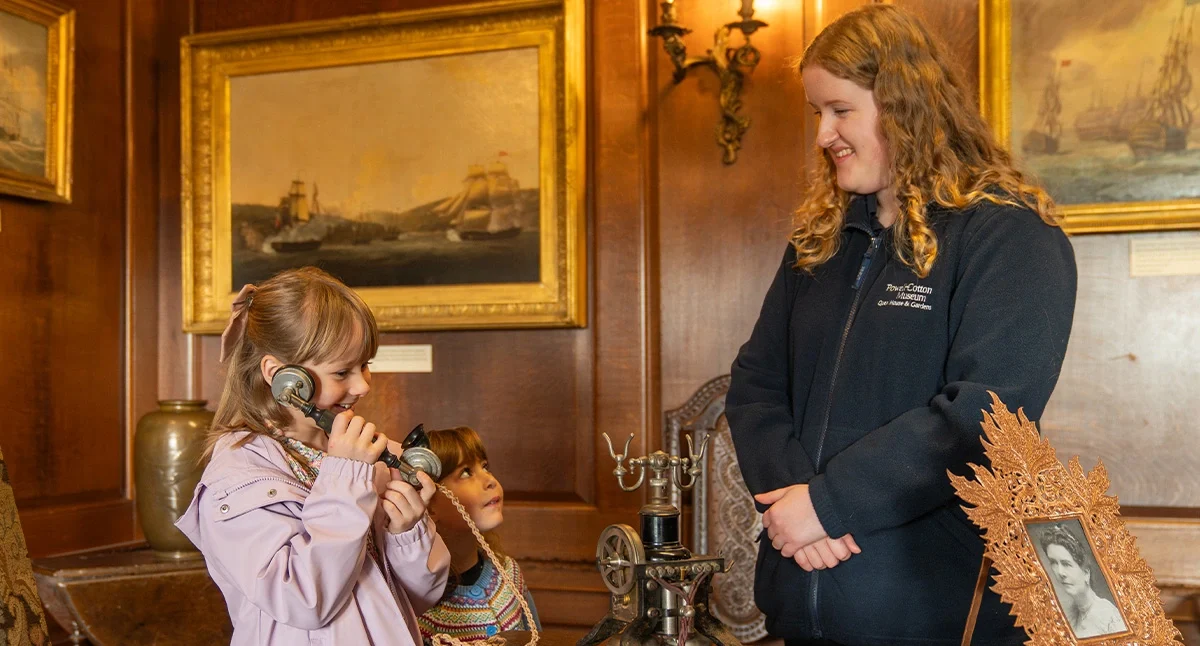
The publicly accessible rooms of Quex House are home to some beautiful collections and stories of both heritage and modern day use for visitors to discover.
The publicly accessible rooms of Quex House are home to some beautiful collections and stories of both heritage and modern day use for visitors to discover.
The house we see today is located in a different area of the property and is a fairly modern renovation of the 1816 design by Thomas Hardwick (commissioned by John Powell). The Powell-Cottons continued renovations to make Quex House a comfortable family home.
Today, half of the house is under the ownership of the Powell-Cotton Trust, est.1926, and half remains in private ownership. Visitors can view the publicly accessible rooms Quex House via a guided tour on any of our open days or groups can book a private weekday visit. The tour of the house comprises 6 rooms of varying sizes, 3 downstairs, and 3 upstairs. The rooms are mostly dressed to reflect historic photographs, showing how they would have been used between 1900 and 1940.
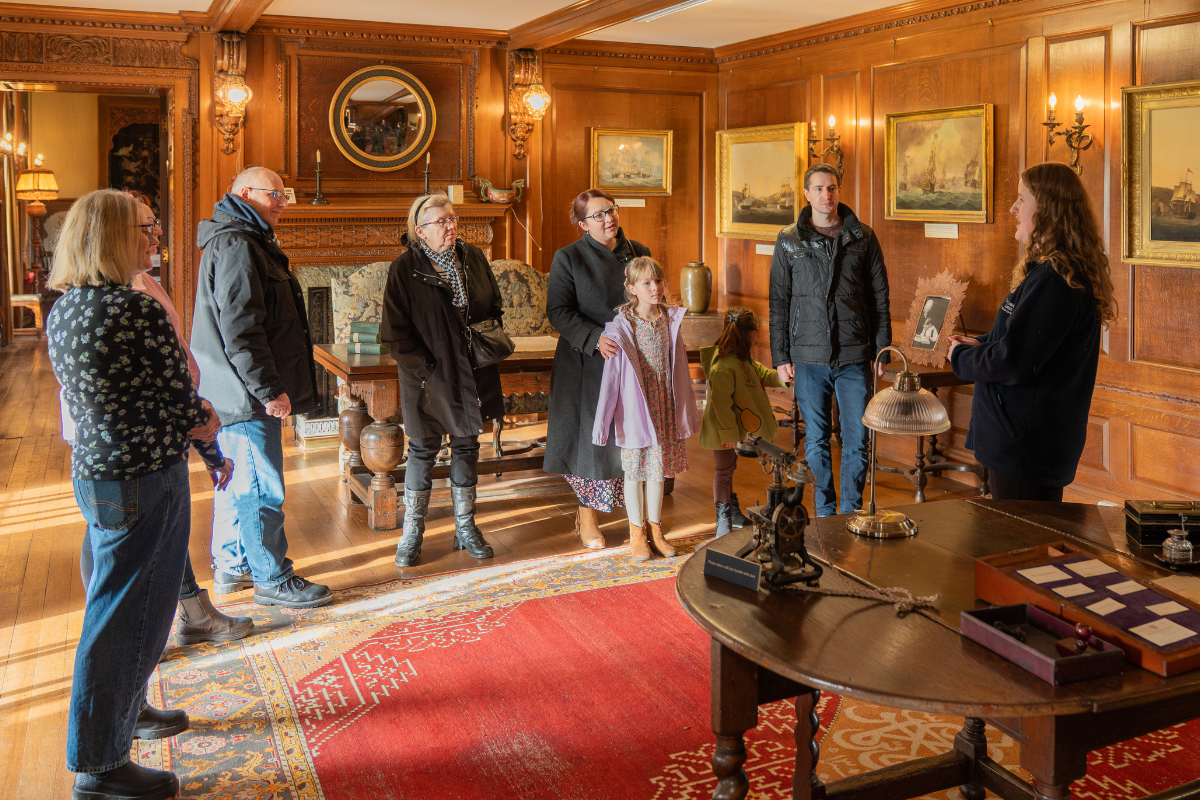
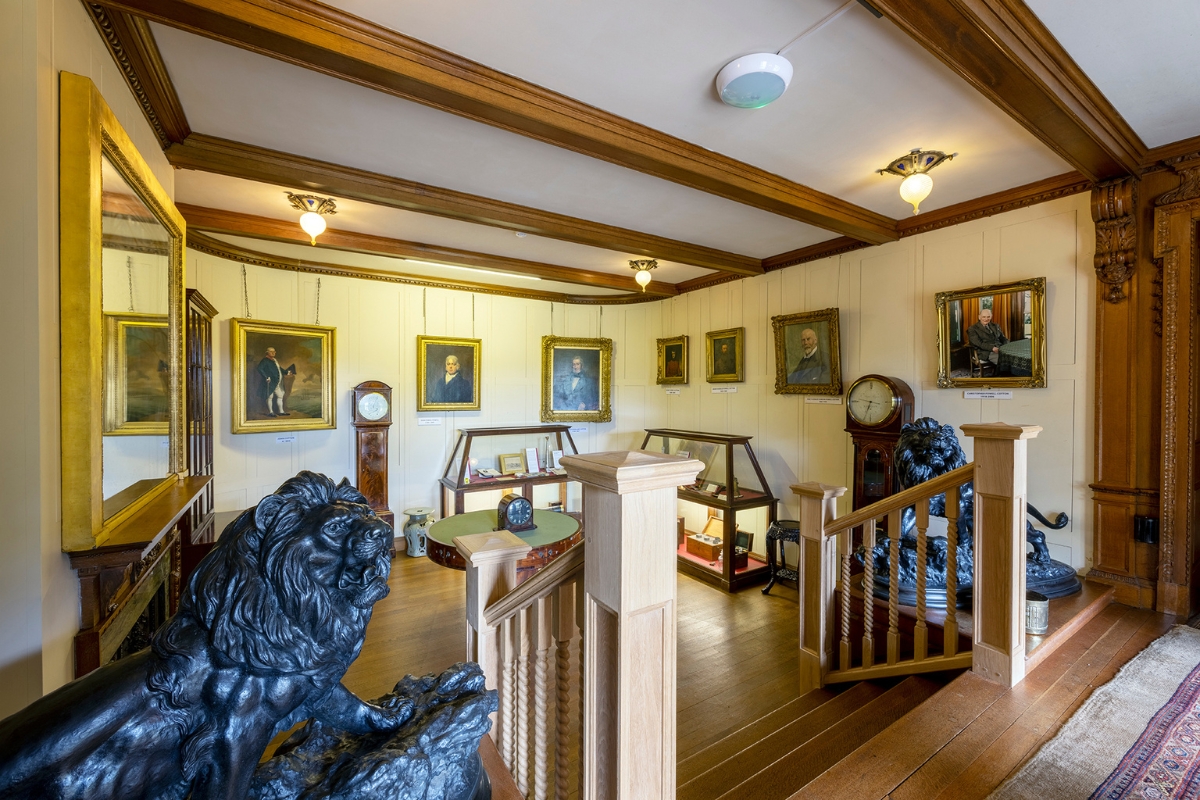
The present Hall was enlarged and remodelled around 1900 in a fashionable ‘Baronial’ style. With the original staircase rebuilt in English oak against the east wall, the room provided a space to welcome visitors. Oak furniture from the 17th century, oil paintings reflecting the family’s maritime history and a fine longcase clock by Thomazon Fitter of Clerkenwell ensure an impression of heritage.
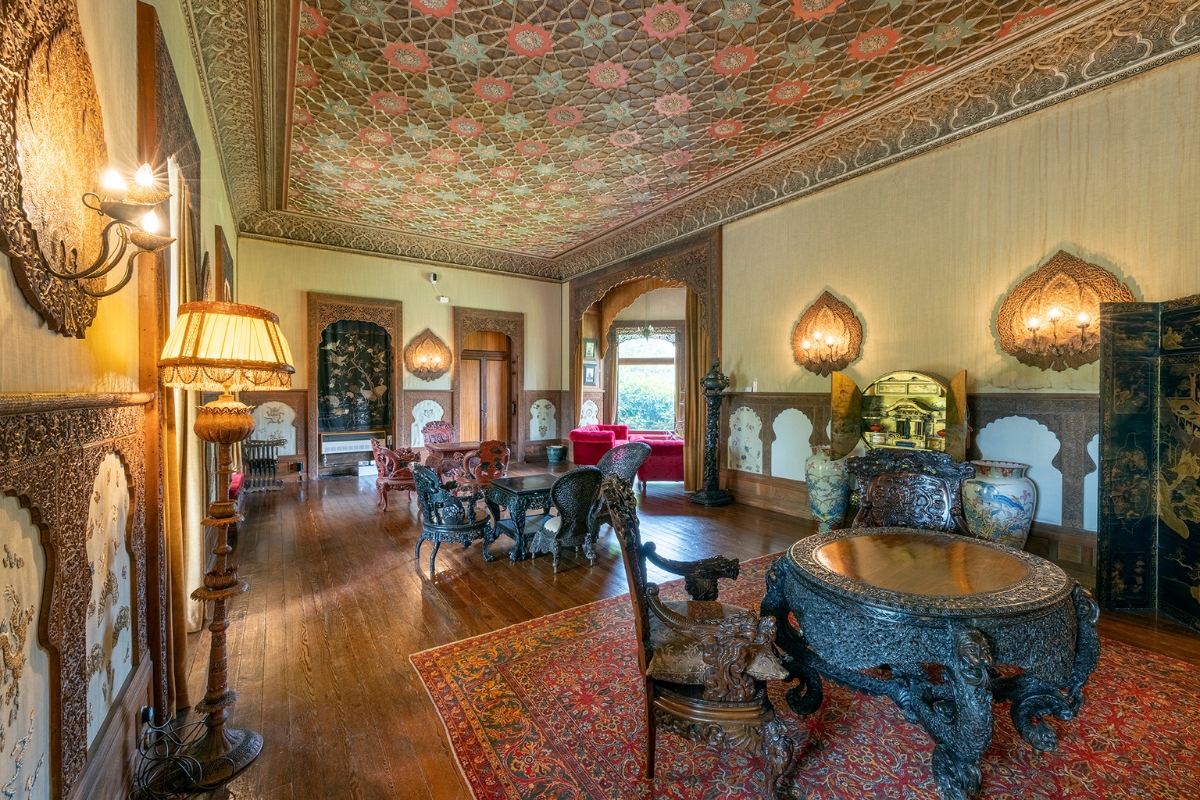
This beautiful room was a late 19th-century extension of the house. It was built as a room for entertainment but also intriguingly served as a VAD ward during the First World War. Today, the furniture is arranged based on photos from the 1910s, when it served as a formal sitting room.
The room features carved Kashmir walnut, which is used as a framework for sumptuous embroidery taken from Chinese Imperial robes, numerous elegant light fittings, and a ‘temple’ of a fireplace. The furniture, originally made mainly for the European market, is from India, China and Japan. Red lacquer dragon chairs stand proudly alongside an elegant, round cabinet, inspired by Japanese domestic shrines. Intricate bronzes and fine ceramics complete the room. Arguably, the most breath taking feature is the patterned papier mache ceiling.
No longer used to house weapons, portraits of six generations look down on treasured family objects – a ‘Benjamin Franklin’ clock, possibly made for John Powell Powell, enticing Napoleonic memorabilia, pewter and glass hint at some intriguing family connections and collecting passions.
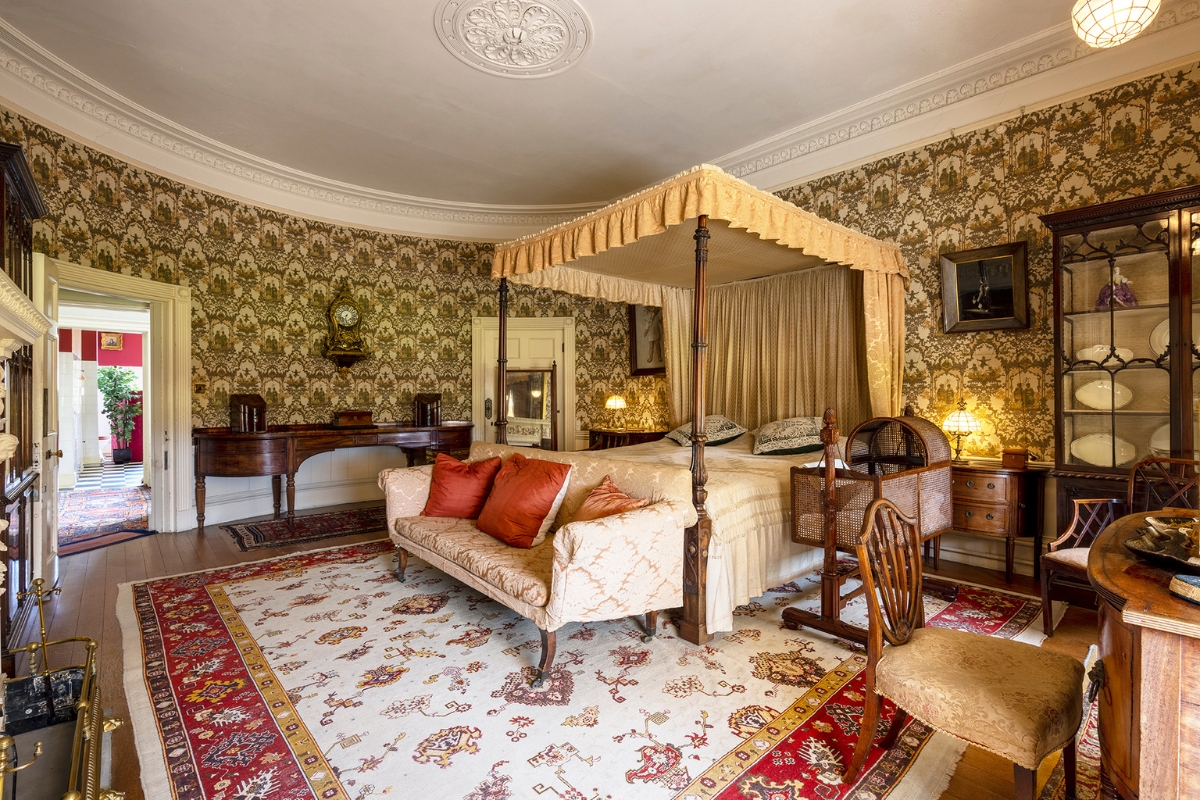
Arranged to represent its service as a guest bedroom, this space is dominated by an elegant mahogany four-poster bed. Along the walls, there are cabinets and sideboards showcasing ceramic collections and smaller family heirlooms. On the wall, there is a portrait of Diana Powell-Cotton as a child. The curtains reveal a beautiful view across the front lawn and meadow.
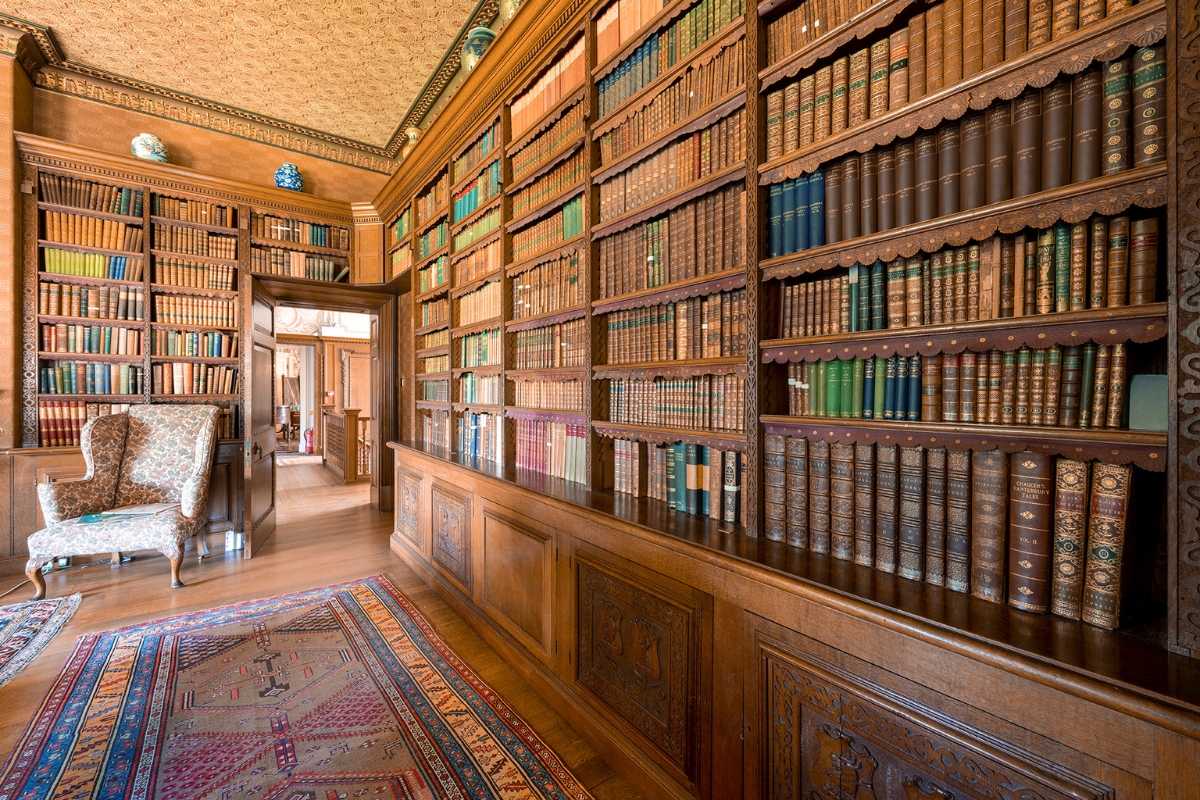
A staff and visitor favourite, this room is home to over 3000 books collected by six generations of the Powell-Cotton family. The room was also used as a sitting room with comfortable furniture. On the island reading desk is the Congreve or rolling-ball clock. Designed by William Congreve, inventor, engineer and creator of the rocket batteries of the Napoleonic wars, it was made for John Powell-Powell in 1820.
The portrait over the fireplace is of Hannah Powell-Cotton, who married Percy Powell-Cotton in 1905. Although we don’t have many of her records, we know she was highly involved in the creation and running of the museum. The painter who created the portrait also created some of the backgrounds in the dioramas.
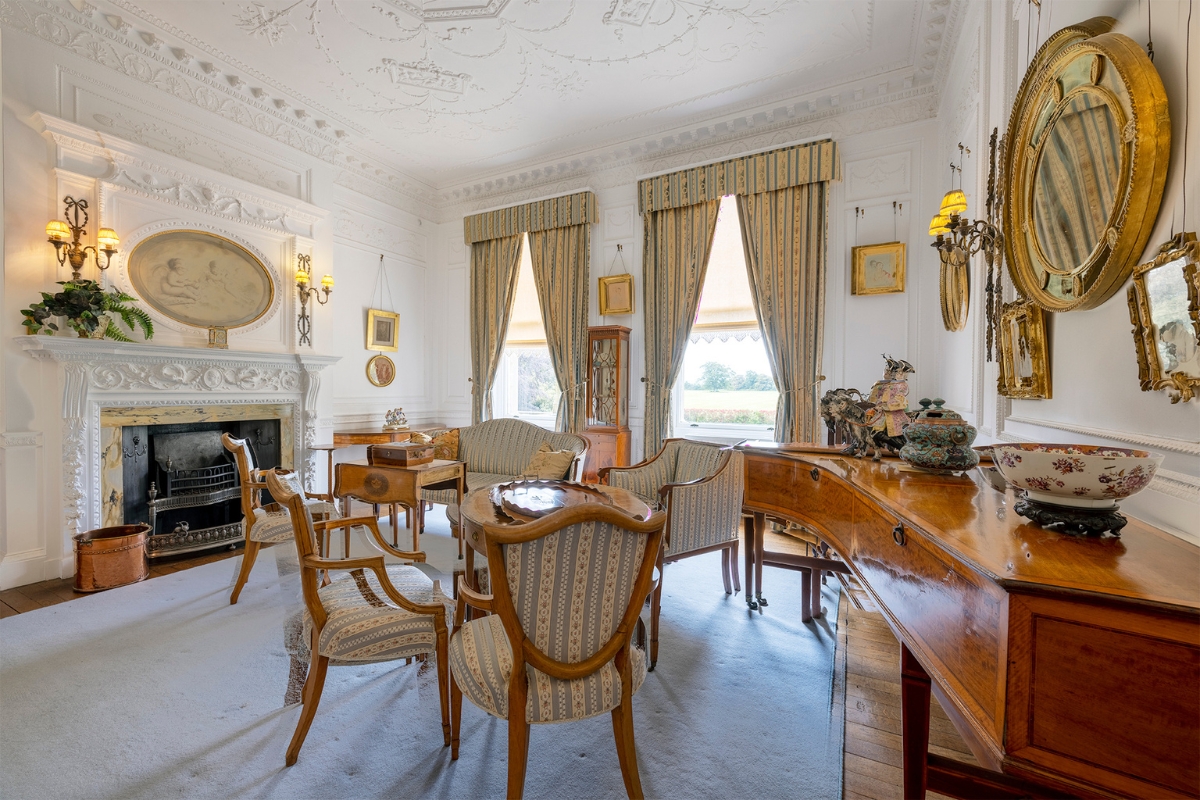
This room and the library used to be one large withdrawing room, and you can still see the outline of the large door that would have connected them. They were split to create a private space for Hannah Powell-Cotton and since this room was created for her, it is decorated very differently from the rest of the house. The colour scheme is much lighter, there are comfortable seats and small drinks and games tables. In the corner sits a fortepiano, which opposed to a full grand piano only has 5 ½ octaves. Furniture echoes the Regency period, using satinwood and mahogany inlaid with a variety of coloured woods. On sunny days, this room catches the light beautifully.