The gardens at Quex were originally laid out in the fifteenth century when the first manor house was built but were extensively remodelled throughout the nineteenth century so that the present design contains strong Regency, Victorian and Edwardian influences.
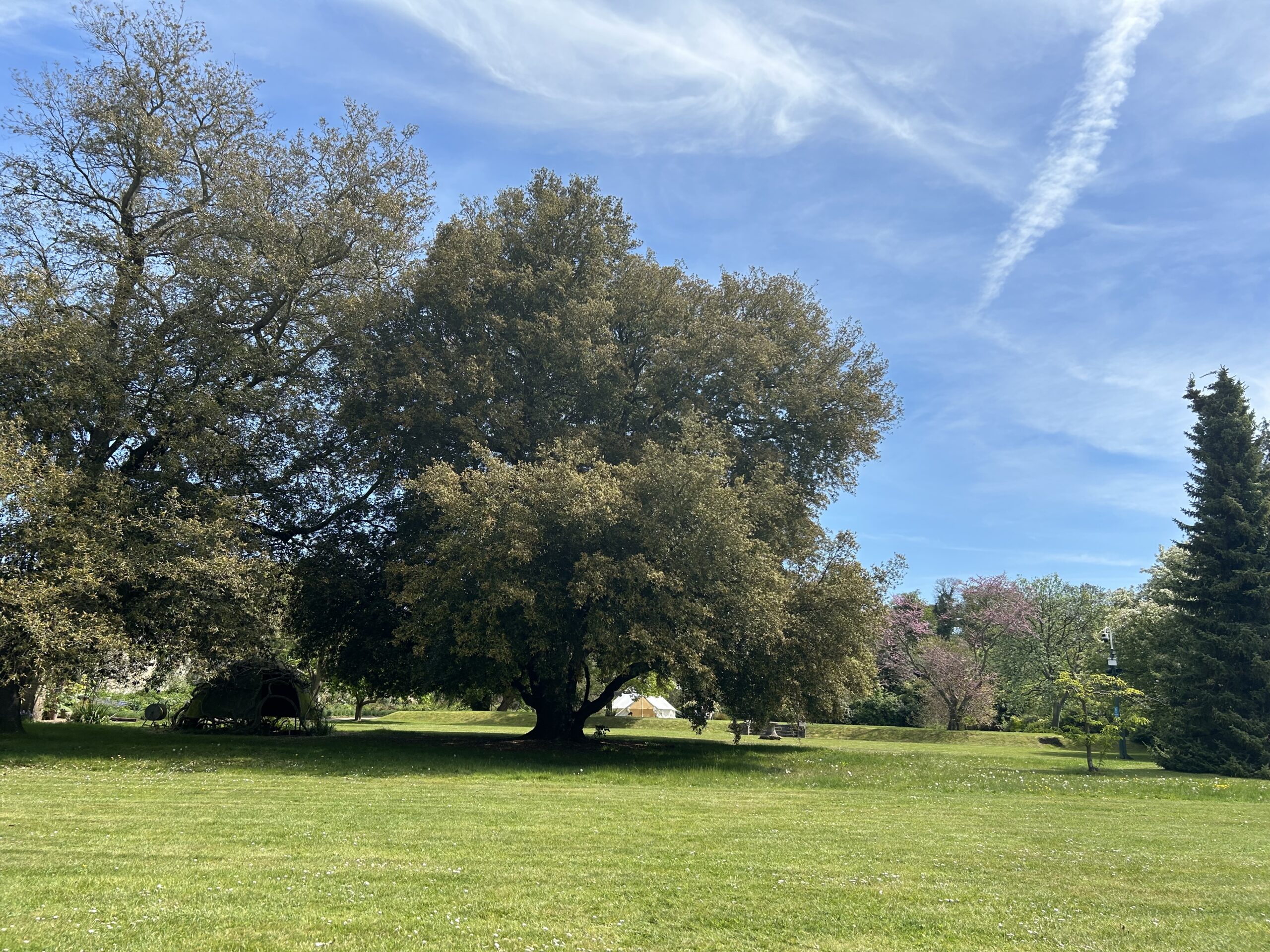
The gardens were designed to be viewed from the main withdrawing room on the first floor of the house, from where lawns radiate around a central vista ending in the far distance with the Gun Tower, one of three follies in the grounds. The established parkland within Quex Gardens contains numerous ornamental specimen trees and a sunken fountain garden.
This sunken area was once a formal Italianate garden with a small pond, paths, steps and a stonework balustrade wall. Over time the stonework was removed and in 1913 a new and enormous pond was created to supply a firefighting system in Quex House. The statues of Atalanta and Hippomenes were added at this time.
On the upper terraces of the lawn, there are some fine specimen trees, including two ancient Mulberries and a veteran Sophora Japonica. A vibrant Edwardian herbaceous border can be found against the south wall of the 1840s walled garden. A more recent introduction is a rose border with a lavender hedge. This planting has replaced the box hedging which has been removed due to the damage caused by the box moth caterpillar.
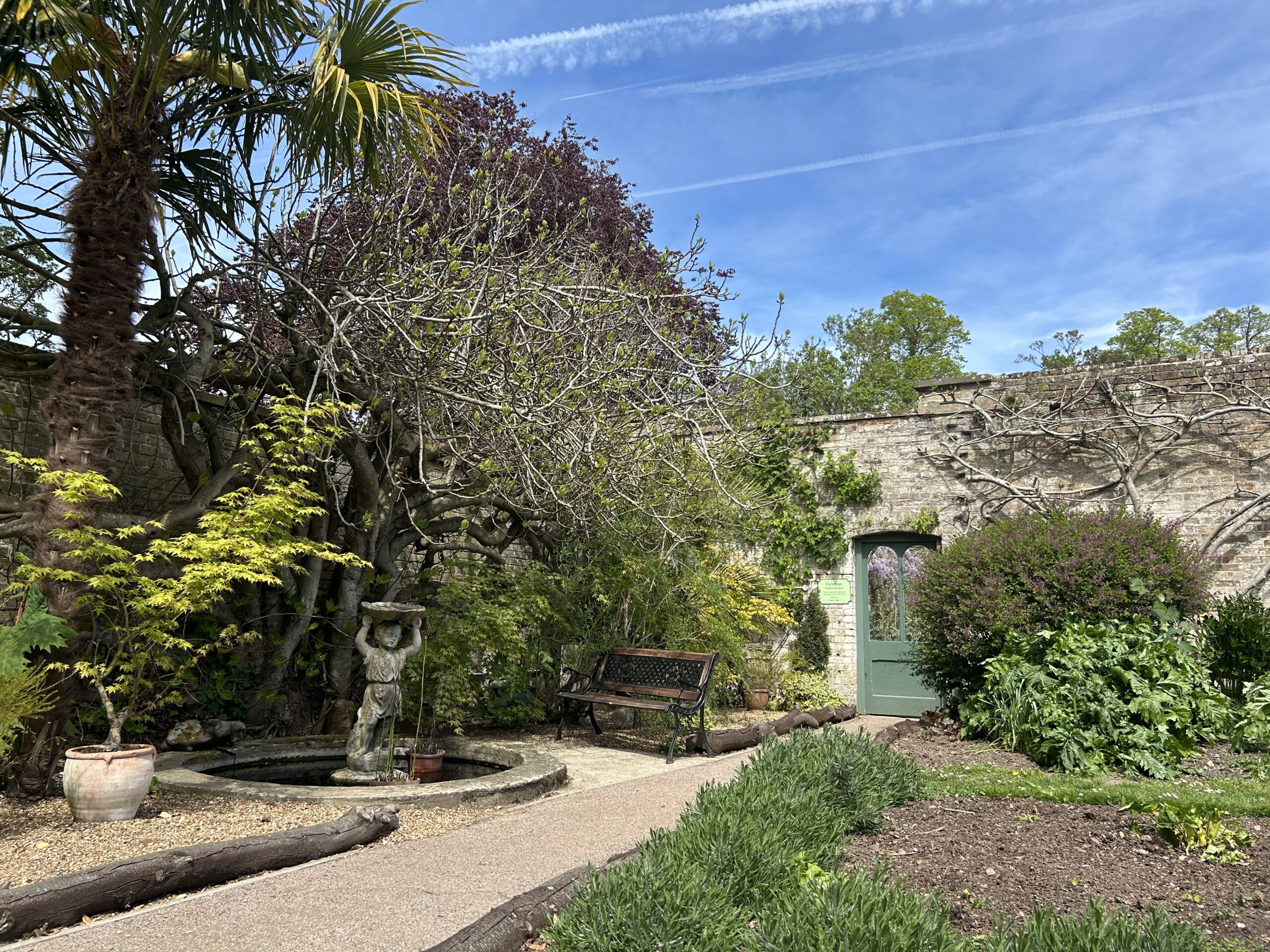
This garden leads to the Victorian walled garden with a variety of glasshouses, which had later commercial use as a market garden. Over time the glasshouses have required constant care and restoration but are usually accessible to visitors and include a shade house (Fernery), sunken Cucumber Pit, a display Stove House and against the south facing wall a full run of three vine houses and two orchid houses. The full span Winter Garden has become a welcoming hospitality space and links the walled garden to the main lawns, through the glasshouses.
Work is ongoing to preserve and maintain the glasshouse structures and to grow a wide variety of seasonal fruit and vegetables, as well as ornamental plants.
Surrounding the gardens is a woodland walk, with a good show of spring bulbs and planted beds, contrasting with the more formal pleasure grounds of the mansion.
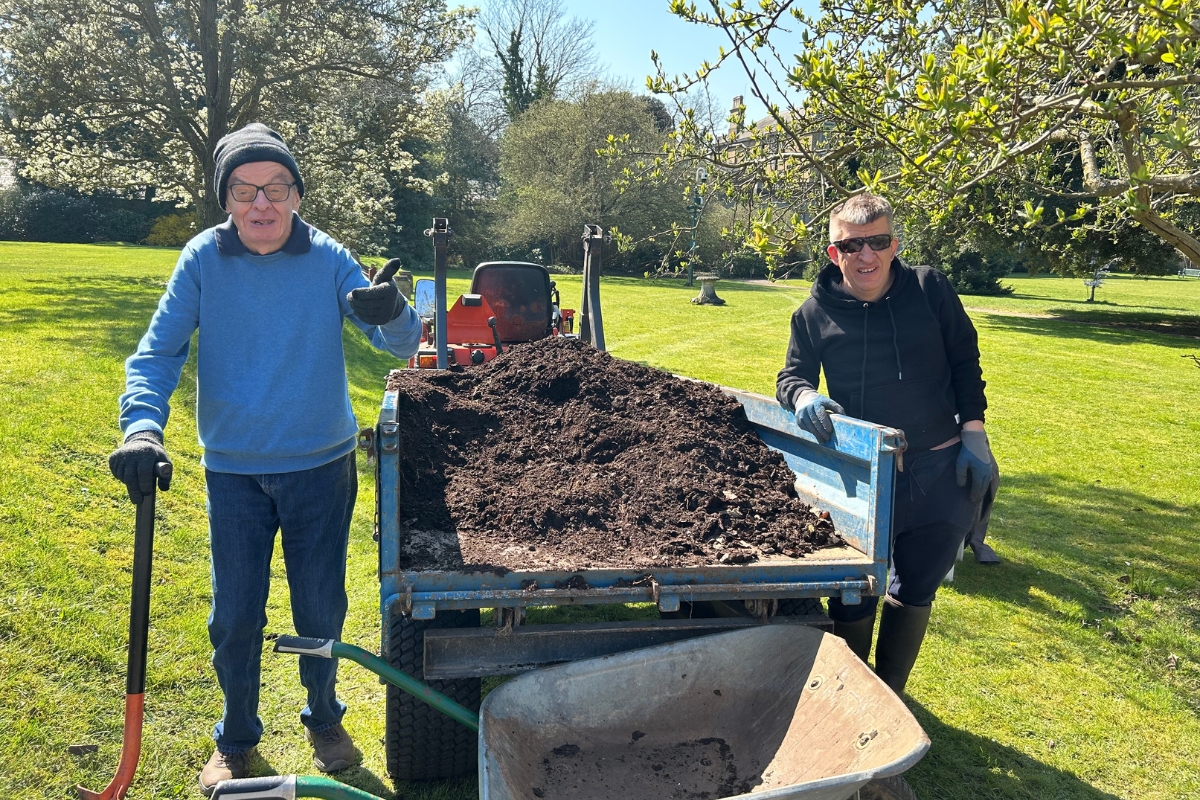
From 1883 James Cornford was Head Gardener at Quex and by 1902 about twenty gardeners were employed. Today we have a small team of employed gardeners who work with many volunteer groups.