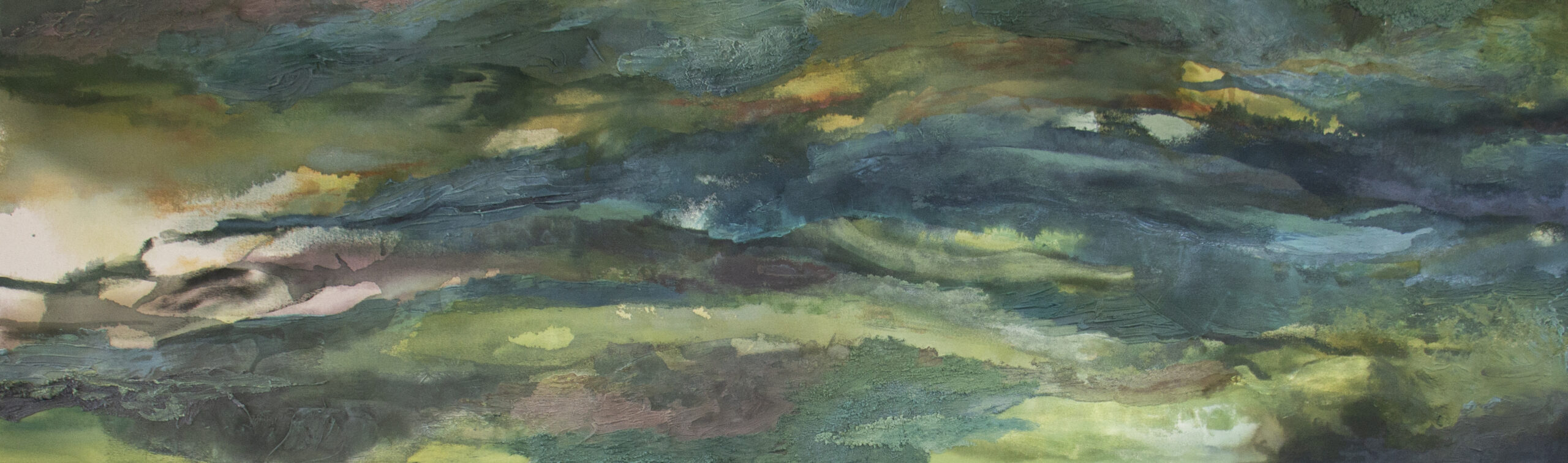
An Interview with Sam Parsons
Our 2026 Artist in Residence, Sam Parsons, talks about his background and inspiration behind the new exhibition Field Guide – Future Edition.
Our 2026 Artist in Residence, Sam Parsons, talks about his background and inspiration behind the new exhibition Field Guide – Future Edition.
Sam reflects on childhood memories of the Powell-Cotton Museum, his journey from zoology to art, and how imagination can help reshape our relationship with the natural world.
Growing up, I was either running around in nature or drawing and painting. My dad was a woodcarver and sculptor, and a big influence on this. So, I’ve just never been able to pick between the two topics, although for many years, I felt I had to. Eventually, you learn you don’t have to fit inside a box.
I remember drawing the animals and being completely fascinated by them. Unfortunately, I don’t have the drawings now. It would have been a good starting point for the exhibition.
Exciting, but there was a sense of trepidation. There are lots of pairs of eyes in the gallery staring back at us, representing individuals and species, and a larger, more-than-human world. I wanted to make sure I spent time learning from them and doing them justice. It’s also not like exhibiting in a white room — the paintings have to work with the dioramas in a large space that’s not at eye level. There has been a lot to consider.
I worked on a couple of different reserves in South Africa, so I immediately gravitated towards the dioramas. My works are imagined, but they draw on memories and studying how our views have changed. How they differ from past views, how we have a different perspective to other species, and how our perspective needs to continue changing to take us into the future.
The inhabitants of the gallery are from different locations, pieced together to make a static diorama. I wanted to depict a sense of these locations, stitching together different habitats to capture multiple perspectives and a constantly changing, layered environment — an entangled world where everything is connected. I was also very conscious that you can spend hours in the wild waiting for a sighting, and sometimes all you get is a fleeting glance.
I start with an idea, but no exact plan, and let the materials, instinct and indecision gradually evolve. I don’t always work in 3D, but I felt this space needed it, and so gradually the sculptures moved off the canvas and then were stitched back on. There are also old garments within the work, merging us with the landscape instead of placing us in the foreground. I work towards a moment when I feel like I’ve caught the sensation of being outside.
I find this interesting and could talk about this for hours, which is why we do have some upcoming talks planned and I am looking forward to working with some of the local schools. Imagination and creativity are crucial in telling convincing stories that can influence our future actions – facts alone aren’t usually enough. We just have to be telling the right stories. Many of our tales have actually served to separate ourselves from nature. We need less big bad wolves, and more stories rooted in ecological truths, positive emotions and awe. Fortunately, there is already so much amazing work happening across all the arts and sciences which does give me hope, and has inspired me. I’ve started to compile a growing list of references on my website to help spread the word to anyone who would like to read more.
I hope it triggers more conversations, more stories, more moments of engagement with nature. It’s not about being in the wild in Africa. We are surrounded by beauty, especially here so close to the sea. We need more moments when we remind ourselves that we are animals and our habitats are a special place.
Visit www.samparsons.com for more of Sam’s work and information about the artist.